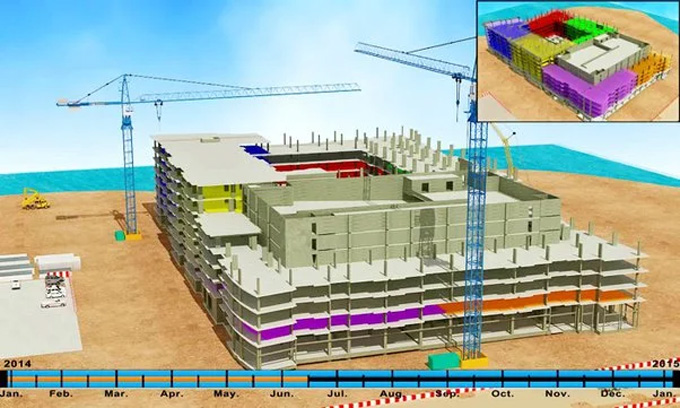

How 4D Construction Modeling Is Bringing Construction Firms
A 4D construction model is the combination of a 3D design model along with a project schedule, which helps to create a simulation of the construction activities. The 4D construction modelling refers to the breakdown of the design model into the constructible components, which helps to add the design element of time to a 3D design model. The 4D design model helps to stimulate and optimise the construction sequencing, resource planning and site logistics.
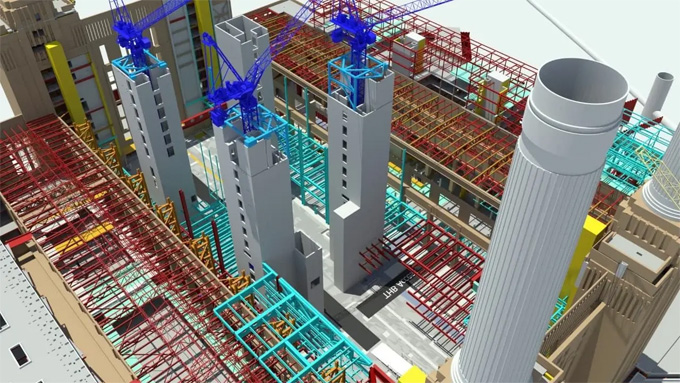
4D construction simulation is a part of building information modelling, which offers all kinds of building construction in various sectors, for example, residential, commercial, industrial and others. There are plenty of benefits for the new building construction design projects, for example, 3D visualisation, 4D visualisation along with a time.
4D construction simulation is the extension of 3D design with time included in addition to the other 3 dimensions. 4D construction simulation also helps to link the project construction sequencing or the schedule to the BIM design model, and also helps to show the real-time simulation of the construction sequence. Based on the 4D presentation, the clients can compare the planned and actual construction sequence throughout the life cycle of the project.
How to implement 4D construction simulation in the construction project
Collecting project information and creating a 3D design model
In the case of implementing 4D simulation in the construction project, the project team members need to collect all relevant data related to the construction project, for example, construction schedules, architectural drawings, engineering drawings and resource allocation plans. The design inputs achieved from the 4D construction simulation help to create a detailed 3D design model, which helps to represent the physical elements of the design project more accurately.
Incorporation of the scheduling information into the design model
With the help of the 4D construction simulation, the project schedules and timelines have been integrated into the simulation after preparing a 3D design model. This step helps to link the 3D design model along with the time-based data, for example, dependencies, task durations, and milestones. In addition, the incorporation of the scheduling information into the design model also helps to ensure that the simulation can reflect the sequencing and progress of the project accurately.
Linking 3D design models along with time-based data
With the help of the 4D construction simulation, the 3D design model can also be linked with the corresponding time-based data. This process allows the simulation software to understand the logical connections among different project components. The 4D construction simulation also helps to synchronise the 3D design model along with the project schedule, so that the project stakeholders can visualise the construction sequence, as well as can also identify any kind of clashes or inefficiencies in the design project.
Simulating the project progression
After synchronising the 3D design model and scheduling information, the 4D simulation software helps to generate a dynamic visualisation of the construction process. This virtual representation helps to represent how the design project will evolve over time. This process enables the project stakeholders to optimise the construction sequence, and thus they can make more informed decisions for improving the design project outcomes.
Learn about the key advantages of the 4D construction simulation for the construction project
Improving the project planning and scheduling process
With the help of the 4D construction simulation software, the project team members can visualise the project’s schedule, and thus, they are able to identify the critical paths and project delays. This project scheduling feature helps to ensure that the project resources are allocated optimally and the design tasks have been scheduled appropriately to meet the deadlines of the project.
Enhancing project communication and collaboration
The 4D construction simulation software has acted as a powerful communication tool, which helps to facilitate better collaboration among the project stakeholders. The 4D construction simulation tool helps to bridge the gap between the technical and non-technical team members, thus all team members are allowed to grasp the progression of the design project.
Helps in resource utilisation
With the help of the 4D construction simulation tool, the project team members can also analyse the resource allocation and utilisation process throughout the entire project lifecycle.
The project stakeholders can also identify potential resource conflicts, avoid unnecessary downtime and optimise resource allocation by visualising the construction sequence.
To learn more, watch the following video tutorial.
Video Source: V5D
Risk identification and mitigation feature
With the help of the 4D construction simulation tool, the users are also allowed to identify potential risks and conflicts within the project before the beginning of the actual construction process. The project team members can also anticipate the project clashes and safety hazards by visualising the project’s evolution.