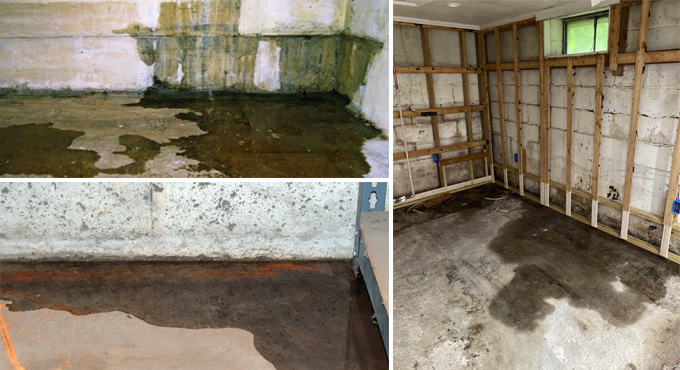

Reasons for Basement Leakage during Heavy Rainfall
Discuss the common causes of basement leakage during heavy Rainfall
Hydrostatic pressure
Hydrostatic pressure is one of the mian reason of the basement leakage during heavy rainfall. The soil surrounding the basement can be saturated during heavy rainfall, which leads to the accumulation of groundwater around the foundation walls. When pressure increases, the water finds paths of least resistance to enter the basement. Small cracks in the concrete also allow moisture to seep through the basement when enough pressure is present. Repeated exposure to the groundwater leads to enhanced foundation vulnerabilities.
Poor drainage system
An improper drainage system around the house is another reason for basement leakage. In the case of the ground slope towards the foundation structure of the house, rainwater can accumulate and seep into the basement. Poorly installed gutters also contribute to water pooling near the foundation of the house, which leads to damage and leakage in the basement.
Water accumulation at the cove joint
The cove joint refers to the place where the wall meets the floor. This is the main spot for leakage, as water finds its way through this connection when pressure occurs around the foundation.
Cracks occur in the foundation
In the case of cracks occurring in the foundation structure, it leads to the entry of water during storms and heavy rainfall. The foundation cracks can occur as concrete has expanded, contracted and settled over time. The foundation cracks may continue to grow if the surrounding soil of the foundation shifts and excess moisture can accumulate, which leads to weakening the foundation structure over time.
Leakage in the window well
The window well in the basement can also become vulnerable during heavy rainfall. This can happen if the window well does not drain properly; water can accumulate around the basement window, which leads to basement leakage. The window well can also overflow if debris or leaves accumulate and clog the basement window.
Poor sump pumps
Many houses rely on the sump pump system, which helps to remove the excess groundwater during storms. Sump pumps can fail during extreme weather conditions for various reasons, including clogged discharge lines, power outages, ageing equipment or negligible maintenance, which impairs the function of the sump pumps. This sump pump failure leads to quick water accumulation in the basement during heavy rainfall.
Leakage in the plumbing pipes
Internal plumbing issues, for example, pipe leakage, water heater issues, and a backed-up drainage system, also lead to serious moisture problems in the basement during heavy rains.
Learn about the possible methods of preventing basement leakage
Inspecting and repairing foundation cracks
It is important to check the basement walls and floors periodically for any gaps or cracks. If small cracks appear, high-quality waterproof sealant needs to be used to repair the small cracks. In the case of larger or persistent cracks, the homeowner needs to consult a professional to ensure the cracks are properly sealed or not.
Maintaining gutters regularly
Homeowners also need to keep the gutters free of leaves or debris to avoid overflowing of the gutters. In addition, they also need to check that the downspouts have been securely attached and are functioning properly or not.
Ensuring a proper drainage system
The homeowners also need to ensure that the soil slopes away from the house to direct the water away. The homeowners can also install extensions to carry water at least 6 feet away from the foundation structure.
Adding waterproofing layers
The homeowners need to select a strong waterproof paint or sealant for the basement walls. In this context, the manufacturer’s instructions need to be followed properly to get the best results. The waterproof layers can be added for minor moisture issues.
Utlising french drain
This type of drainage system helps to redirect the groundwater away from the house. French drains are cost-effective and long-term durable to prevent water from pooling around the house.
Install a proper sump pump system
A sump pump helps to prevent the accumulation of water around the basement. The homeowner needs to ensure that the sump pump has been correctly installed to ensure that it pumps out the water. Routine maintenance of the sump pump is necessary before heavy rains to avoid faulty functioning of the sump pump during rainfall.
Landscape strategically around the house
The landscape around the house also helps to prevent basement leakage. In this context, homeowners can use water-absorbing plants and shrubs near the foundation structure and also need to reduce the concrete areas, which prevent water absorption. In case of having trees with invasive roots on the property, the homeowners need to keep the roots away from the foundation structure to protect it.
Understand the importance of preventing basement leakage
Due to ignorance of water issues, severe damage can occur in the basement. Even occasional damage can lead to long-term problems if it is left untreated. Excess moisture content in the basement contributes to mould growth, weakens the drywall, damages floors and also leads to structural deterioration over time.
Addressing water leakage early is more affordable than dealing with major damage. Basement waterproofing helps homeowners identify the source of the basement leakage and also helps to develop a long-term solution for the property. So, by preventing water leakage, homeowners can protect their houses, belongings and foundation structure from costly water intrusion.