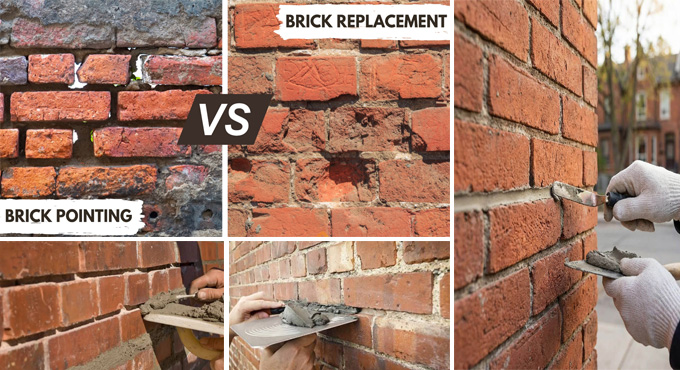

Brick Pointing vs. Brick Replacement: Discuss the right choice for Home Construction
Concept about Brick Pointing
The brick pointing refers to the tuckpointing, in which, deteriorated mortar between the bricks has been removed and it has been replacted with the fresh mortar. In the brick pointing process, the brisks are stayed exactly where it is and only the joints between the bricks has been addressed.
Brick pointing is one of the most common masonry repair processes, as the mortar has been designed to wear out before the brick does. The mortar layer applied in the brick pointing process acts as the sacrificial layer, which helps to protect the brick wall from damage.
Lasting period of brick pointing
The lifespan of the brick pointing depends on different factors. The quality of the existing masonry, weather exposure, water management process, workmanship, mortar selection process and maintenance process have a significant impact on the brick pointing process. If a well executed repairment has been properly maintained, it can be lasts for a longer period of time.
Concept about brick replacement
The brick replacement refers to the process of removing and replacing the individual bricks in the building structure, which has been deteriorated beyond repair. The replacement of the bricks is necessary when the brick itself has been compromised.
When is brick pointing or brick replacement required?
Brick pointing or brick replacement is required due to different underlying issues with the brickwork, which are as follows:
Inappropriately clean surface
The brick wall can be damaged if the wall surface is not cleaned appropriately, which leads to the requirement of brick pointing or replacement of the bricks. In this context, an aggressive cleaning method can be appropriate to remove the protective fired surface of the bricks. In addition, a chemical cleaning process can also be done, though it can leave stains.
Dampness
Rising dampness in the house can be indicated by decaying timber flooring or crumbling plaster. Dampness in the home can occur due to poor pointing to the brickwork or water leakage into the wall. In the case of these kinds of dampness in the house, brick repointing or brick replacement is required according to the needs.
Damage in bricks
If the bricks of the house are damaged, it leads to more moisture penetration into the house, which significantly impacts the structural integrity of the walls. In some cases, over time, brickwork can also develop damage. Serious damage in the wall needs to be cut out and replaced.
Failed pointing
If the brick pointing has been done in a way that unintentionally damaged the brick wall, it can trap moisture in the brick wall and prevent the moisture from escaping through the mortar joints, which can also lead to the crumbling of the brick surface and require brick pointing or replacement.
Key differences between brick pointing and brick replacement
The mortar joints between the bricks are repaired in the brick pointing process. On the other hand, the entire bricks are replaced in the brick replacement process. In the case where the brick is sound and the mortar has fallen out, then brick pointing is generally the repair to be investigated. In the case where the mortar is acceptable, but the brick is broken or severely damaged, then brick replacement is necessary.
If both mortar and brick have deteriorated, then both brick pointing and brick replacement are required to treat the brick wall. Sometimes, damage in the mortar is not visible from a distance, so it can look acceptable while it has been weak under the surface. In this context, the condition of the masonry needs to be assessed before deciding on the brickwork process.
What are the signs that indicates the requirements of the brick pointing or brick replacement?
Signs indicating the requirement for brick pointing:
➢ If the mortar joints between the brick walls have crumbled, are missing or are cracked, then brick pointing needs to be done.
➢ In the case of the water has been absorbed behind the brick wall through gaps in the mortar, then brick pointing also needs to be done. In the brick pointing process, the brick wall is structurally sound, as the brick pointing process helps to address the mortar before it leads to further damage to the brick wall. The brick pointing process is less expensive than the brick replacement process.
Signs indicating the need for brick replacement:
➢ The brick replacement process is needed if the brick has been flaking, cracking, or popping off.
➢ If the bricks are crumbled or soft to the touch, then it also needs to be replaced.
➢ In the case that the bricks are discoloured or structurally unsound, then it also needs to be replaced.
➢ In the sections of the brick wall where brick repointing alone will not stop the ongoing water damage to the wall, the brick needs to be replaced.