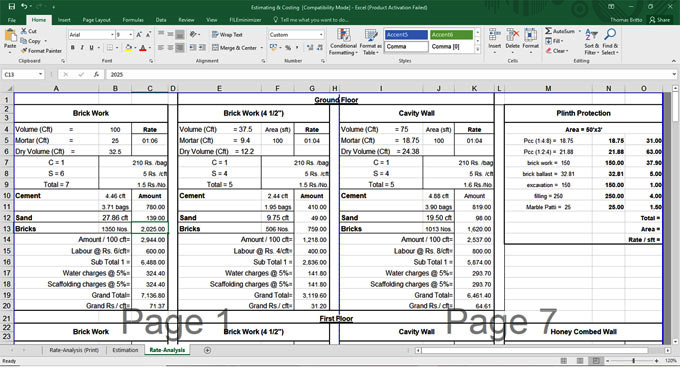

Analysis of Rates for Civil Engineering Works
Rate analysis refers to the process of breaking down the cost of the construction item into the constituent elements, for example, labour, materials, equipment, overheads, and contingencies. The rate analysis process helps to achieve a realistic unit rate for the construction items. This realistic unit rate has become the basis for preparing bills, estimates, and tender documents for the civil engineering projects.
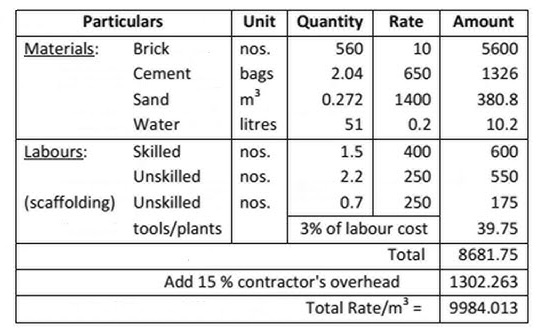
Learn about the components of the rate analysis process
1. Materials cost: The current market rate of the construction materials, including cement, sand, steel, aggregates and others, should be considered.
2. Labour cost: The wages should be included for the skilled, semi‑skilled and unskilled labourers as per day or per unit.
3. Overhead cost: The site-office expenses, transportation expenses, utilities expenses and supervision costs also need to be included in the rate analysis process.
4. Equipment cost: The hiring charges or operation charges also need to be included in the rate analysis process.
5. Contingencies and profit: There should be allowances for unforeseen events and the contractor’s margin.
What is the purpose of rate analysis for civil engineering works?
There are several purposes of rate analysis, which are as follows:
1. The rate analysis for the civil engineering work helps to determine the current rate per unit of a construction item at the locality.
2. The other purpose of rate analysis is to examine the viability of rates that have been offered by the contractors.
3. The rate analysis also aims to calculate the labour strength and equipment that have been essential for the project planning.
4. The other aim of the rate analysis is to fix the labour contract rates.
Discuss the factors that influence the analysis of rates for civil engineering works
There are several factors that influence the rate analysis for the civil engineering works, which are:
➢ Specification of the construction items, including the quality of the construction materials, proportion of the construction materials, and method of construction of the materials and also the protection of work, also influences the rate analysis process for the civil engineering project.
➢ The material’s rate for each construction item of work up to the worksite also influences the rate analysis process for the civil engineering project.
➢ The wages of the labourers on a daily basis, with different categories, with localities or as per outputs, also provide an impact on the rate analysis process.
➢ Another important factor for the rate analysis process is the range of lead and lift, which is required for the deposition of the construction materials.
➢ The percentage that has been charged for the overhead costs also plays an important role in influencing the analysis of the rates for the civil engineering works.
➢ The range of profit in the civil engineering project also impacts its rate of analysis.
➢ Another important factor that affects the rate analysis process of the civil engineering project is the availability of water connection, and also the chances of theft or losses in the project.
General process of rate analysis for the civil engineering works
Preparing the bill of quantities item
For achieving the rate analysis for the civil work, the exact description should be identified for each component of the bill of quantities.
Determining the specifications
The relevant codes or client standards should also be determined for mix proportions and workmanship.
Preparing quantity take-off
In the next step, the quantities of the construction materials per unit shouldbe determined.
Collecting current rates
In the next step, the up-to-date prices for each and every construction material should be collected by visiting local suppliers and labour unions.
Estimate direct costs
After collecting the current rates, the direct costs should be computed by adding the material costs, labour costs and the equipment costs.
Adding overhead costs and contingencies
The overhead costs and contingencies should also be estimated. In this regard, 8-12% should be estimated for the overhead costs, and 3-5% should be estimated for the contingencies.
Finalising the unit rates
In the next step, all elements should be summed up, which helps to get the rate for 1 m³, and that is ready for tender or billing.
Learn about the tips for accurate rate analysis for civil engineering works
Price surveys based on the regions
The rates for the civil engineering project should be updated for the individual city on a regular basis.
To learn more, watch the following video tutorial.
Video Source: The Institute of Construction Managment
Seasonal adjustment process
The prices of cement and sand can also spike during the monsoon, so seasonal allowances should be noted.
Variations in labours
The labour wages are higher in the metropolitan areas, so the local labour board notifications should be noticed.
Bulk discounts
In the case of the large volume orders, it is required to negotiate the supplier discounts and reflect them in the rate.