
A Guide of RCC Roof Slab Construction Cost
Concept about RCC roof slab
Reinforced concrete roof helps to perform best during the early years, along with minimal maintenance costs. The RCC roof slab has possibly evolved as the most common roofing solution. The RCC roof slab helps to relegate traditional solutions, such as clay tiles, wood planks, stone slabs, brick domes and such others to the back seat in the competition.
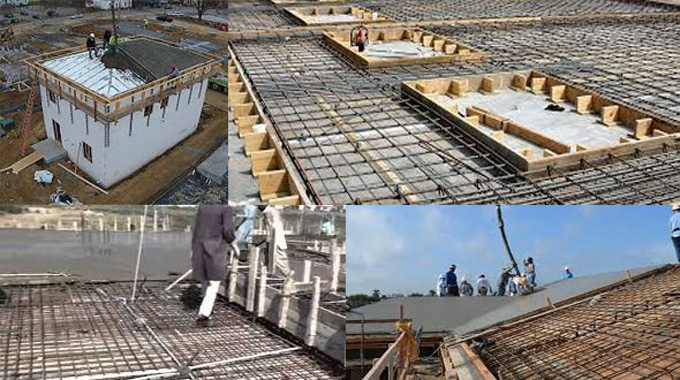
The RCC roof slab helps to perform best during the early years with minimal maintenance cost. The RCC roof slab is a composite material that is composed of concrete, containing steel reinforcement bars. The RCC roof slab has been used in commercial complexes, residential buildings, bridges, industrial floors and roof slabs.
What are the materials used in the RCC roof slab construction?
Numerous materials have been used in the construction process of the RCC roof slabs, which are:
1. Cement
2. Aggregates
3. Sand
4. Steel
5. Water
6. Admixtures (This is optional)
Process of constructing RCC roof slabs
For constructing the RCC roof slabs, there are a few steps that need to be followed, which are:
➢ The construction process should start by constructing beams, columns, and walls.
➢ In the next step, the shuttering work for the roof should be done. The shuttering for the roof can be made of wood or steel. In this context, bamboo or scaffolding blocks need to be used to give support to the shutter, so that the roof shuttering does not collapse under the weight of the slab.
➢ After completing the shuttering work, a mesh of steel bars needs to be placed above the slab. In this context, there should be bent-up bars on the sides of the slab. The cover blocks need to be placed below the steel rods, which have fixed the position of the bars.
➢ In the next step, a concrete mix should be prepared with the help of cement, aggregate, sand and a waterproofing compound.
➢ The concrete mix needs to be applied and levelled well. The finishing work will start after the concrete is compacted.
➢ Small ponds need to be constructed to cure the concrete roof slab. In this context, the curing process should be completed within 2 to 3 weeks. After getting the roof slab strengthened, the roof shuttering can be removed carefully.
Discuss the key advantages of using the RCC roof slab
Increasing the strength and durability of the concrete structure
The RCC roof slabs have high compressive and tensile strength, which is capable of standing heavy loads and harsh environmental conditions.
Enhance ductility
The steel reinforcement in the RCC roof slabs helps to enhance the ductility of this slab. This steel reinforcement in the RCC roof slab enables this concrete slab to undergo considerable bending and deflection under shear force without any kind of sudden failure, and also helps to support seismic resistance.
Economical
The materials that are used in the RCC roof slab are cement, steel, and aggregates. These materials have been widely available and affordable. So, the installation of the RCC roof slab is cost-effective, and it also requires low maintenance due to its long-term durability.
Fire and seismic resistance feature
The components used in the RCC roof slabs are chemically inert and non-combustible materials, along with a slow heat transfer rate. In the event of an earthquake, the construction with RCC roof slabs is likely to be less damaged.
Learn about the key factors that impact the construction cost of the RCC roof slab
The construction cost of the RCC roof slabs has been influenced by several factors, which are as follows:
The types and grades of the cement
The construction cost of the RCC roof slab has varied depending on the different types and brands of cement. The usual cement grade to construct the RCC roof slab is OPC 43 or 53.
The quantity of steel reinforcement
On the basis of the structural design, the use of the steel bar for the RCC roof slab varied.
The thickness of the slabs
Generally, the thickness of the RCC roof slab is about 100mm to 150mm (4-6 inches). In the case of the thicker slabs, more concrete and slab have been consumed.
Location of the construction work
The construction costs of the RCC roof slab have also varied from one city to another. The cost of labour is higher in the metropolitan cities than in the rural areas.
Labour charges
A high level of labour has been required for the accurate laying and curing of the RCC roof slabs. In this context, the cost of labour differs on the basis of the region and complexity of a given project.
To learn more, watch the following video tutorial.
Video Source: Engr Sami
Shuttering work and formwork
Several temporary structures, for example, plywood, steel sheets or wooden planks, have been utilised as the shuttering work or formwork, which also adds to the RCC roof slab construction cost.