

Increased Company Overhead Costs and Their Reasons
The overhead costs refer to all of the costs of the company that are not directly involved with producing goods or services. Different types of companies incur different types of overhead costs.
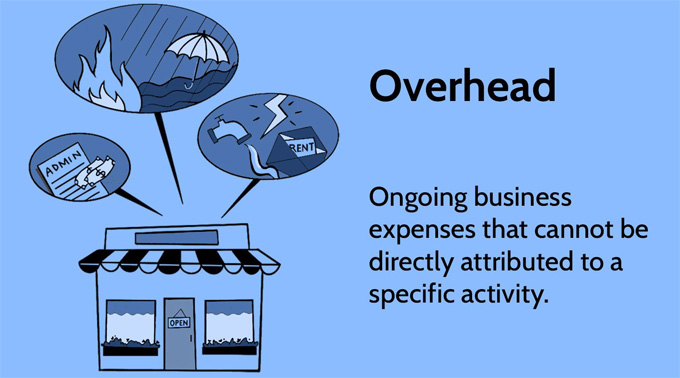
The overhead costs, also known as the operating costs, are the routine costs experienced by the company that are not directly related to the specific business activity of that company. The overhead cost encompasses all the behind-the-scenes costs that are used to keep the business wheels turning.
Discuss the different types of overhead costs
Fixed costs
The fixed costs are the type of overhead costs which remain steady. The fixed costs refer to the costs for rent, insurance, or salaries. These types of overhead costs can be easier to budget, due to not fluctuating from one financial period to another. The higher fixed costs for a business are able to create a larger and less flexible cost burden. In this context, the fixed cost must be covered before a business company makes a profit.
Variable costs
The variable costs of the company is propostional to the business activity of that company. The variable costs refer to the hourly wages, or freelance subcontracted labour wages, or workers who get paid commissions. In addition, the overtime wages for the labours is also considered as the variable costs as these types of costs have been dependent on the amount of production and sales. Other types of variable costs refer to the business-related travel costs, shipping costs, utilities costs and others.
Semi-variable costs
The semi-variable overhead costs refer to the fixed component and the variable component. Like, in the case of a business phone plan have a fixed monthly price, but if the workers on the business trip exceed the allotted data limit, then that business company may experience extra cost.
Learn about the reasons behind the rising overhead costs faced by the company
There are numerous reasons that influence the increase in the company overhead costs, which are as follows:
Monthly fees
Monitoring all the monthly fees helps to keep track of the rising overhead costs and financial loss of the company, as storage or payment processing fees can add up quickly, which leads to the requirement for more payments by the company for a product or service.
Leasing expenses of the business
Most of the companies have to overpay on leases, which become one of the largest overhead expenses. In this context, subleases or renegotiation contracts with the landlord on the basis of the cash flow can be useful to reduce the overhead expenses.
Margins
It is necessary to identify the inherent gross margin of the product lines or business, which helps to ensure that adequate financial reporting is in place to monitor the margin levels. With the help of this financial infrastructure, the company executives can only focus on the revenue and expense components of the business, and thus, the company can mitigate the negative effects on the business.
Business culture of the company
In the case of having a weak business culture in the company or the people of the company are not aligned, the company will not be able to recoup the wasted money, resources and time.
Dynamic budgeting process
The dynamic budgeting strategy helps to expose the pressure points of the business, and it helps to create an opportunity for that company to optimise for cash. Without having a dynamic budget, the company may be getting off track on some expenses. The dynamic budget helps to set parameters, so if the company are getting off track, they can address it as soon as possible.
Inflation
It is necessary to address the many-headed hydra of inflation for a business. A robust plan is required to address shrinking profit margins under pressure from the increasing overhead costs.
Internal and external investment in the business
The financial health of the business depends upon the ability of the company to make the right investments. In this context, the business leaders must cut unnecessary products or services, which can cause financial strain for the company. In addition, the business leaders also have to adjust the pricing of their product or service, which helps to align with the rising overhead costs of the company.
Incentive programs of the company
It needs to be ensured by the company that it have strong incentive program to encourage and motivate the employees. This incentive-related motivation helps to manage the company costs, and thus employees can stay with the company.
To learn more, watch the following video tutorial.
Video Source: Jason Schroeder
The employee turnover is costly as it takes money and time to train the new employees, which leads to an increase in the company's overhead costs.