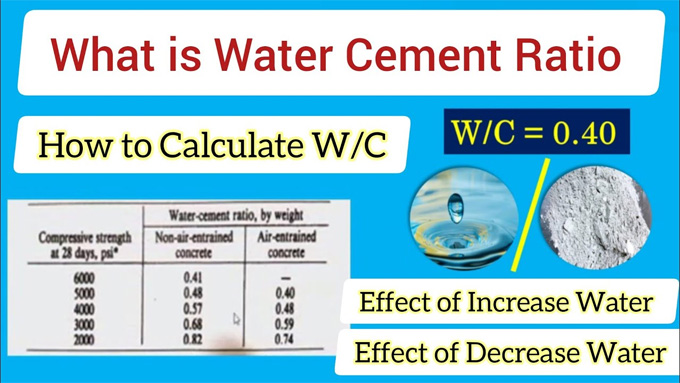

A Quick Guide to Water-Cement Ratio Calculation
A strong concrete mix can be prepared with the right proportions of water and cement. The concrete mix performs well in the construction project while the mixture ratio of water and cement is calculated precisely. Among all the ingredients in the concrete mix, water is the most decisive factor, which helps to shape strength, durability and the way concrete matures over time. The right water-cement ratio in the concrete mix can be estimated by dividing the weight of the water by the weight of the cement.
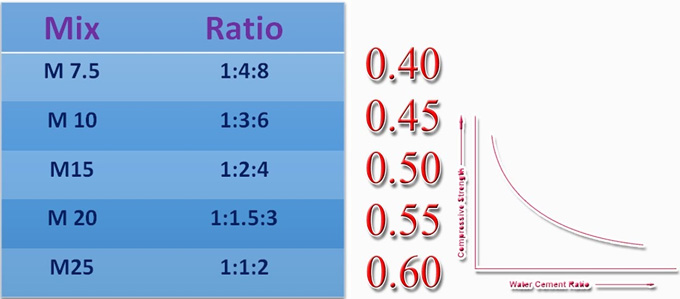
The water-cement ratio matters as excess water can enhance the porosity in the concrete and thus can weaken the concrete. This factor allows greater permeability and thus can reduce the durability of the concrete. The lower water-cement ratio indicates less free water left in the hardened concrete and a denser matrix.
On the other hand, too much water in the concrete mix can lead to higher shrinkage, weaker bond in the concrete and can also enhance the risk of deterioration. In the varied climate, for example, humid monsoons, scorching summers, and cold nights, the control of the water-cement ratio becomes critical for the masonry bond strength, structural integrity and long-term behaviour of the concrete elements.
Importance of the water-cement ratio in concrete
Controls the strength of concrete
The lower water content in the concrete mix helps to achieve higher strength by reducing the number of pores in the hardened concrete. Whereas, too much water leads to excess cracks and voids in the concrete.
Impacts concrete’s durability
As concrete is exposed to the moisture, weather or heavy loads, it needs to resist deterioration. A right water-cement ratio helps to ensure that the concrete withstands the decades of wear without crumbling.
Determining the workability
Enough water is necessary for the smooth workability of the concrete.
Influencing the setting and curing of the concrete
The right amount of water in the concrete mix helps to hydrate the concrete properly. The chemical process of the water and cement helps to give concrete its hardness and stability. On the other hand, the incorrect moisture level in the concrete can lead to the improper curing of the concrete, as well as lead to the long-term structural weakness of the concrete structure.
Discuss the factors that impact the water-cement ratio
Cement types
Different types of cement require different amounts of water. For example, Portland cement requires more water than blended cement. In this context, the characteristics of the chosen cement need to be understood while calculating the water-cement ratio in the concrete mix.
Properties of aggregates
Aggregate also plays an important role in the concrete mix, as the size, shape and gradation of the aggregate influence the water demand of the concrete. Well-graded aggregates require less water than poorly graded aggregates.
Admixtues
Admixtures can also influence the water-cement ratio in the concrete mix. The chemical additives of the admixtures have been designed to improve the specific properties of the concrete, thus impacting the water demand in the concrete. As a result, the admixtures should also be considered as an important factor in the calculation process of the water-cement ratio in the concrete mix.
Environmental factors
Humidity and ambient temperature can also impact the rate of cement hydration. In the case of the hot and dry climate conditions, the water demand of the concrete may increase, which requires adjustments to the water-cement ratio. On the other hand, cold weather conditions require additional precautions while calculating the water-cement ratio of the concrete.
Learn about the process of water-cement ratio calculation
The calculation of the water-cement ratio has been done by following several steps, which are as follows:
Calculating the weight
At first, the weight of the cement used in the concrete mix should be determined. Then the weight of the mixing water in the concrete mix also needs to be determined. It has been assumed that the weight of cement is 400 kg per cubic metre and the weight of water is 160 kg per cubic metre.
Computing the ratio
In the next step, the ratio of the water and cement is estimated by following this formula:
w/c ratio.
So, the water-cement ratio will be = 160/400 = 0.4 or 40%.
Interrupting the results
The result of the water-cement ratio indicates that there is lower water content in the concrete mix relative to the cement content. This lower water content indicates the harder and denser concrete, and the concrete mix may be stiffer and harder to place.
Adjusting for the real-world factors
1. In the case of the aggregates that are damp or flaky, it is required to account for moisture in the aggregates.
2. In the case of the hot weather conditions, there is a chance of losing moisture rapidly.
To learn more, watch the following video tutorial.
Video Source: Civiconcepts - Civil Engineering Easy
3. Sometimes, high-strength concrete or severe exposure conditions are required in the 0.35-0.45 range. A high ratio of water and cement, for example, 0.60, is generally unacceptable as it results in very porous and weak concrete.